The insights gained from Meiklejohn’s work had a significant impact on the broader financial regulatory landscape. Consequently, her techniques for identifying illicit transactions were quickly adopted by authorities worldwide. For instance, tracing money laundering schemes and illicit fund flows across various exchanges became a practical possibility.
The rise of the internet has transformed various aspects of modern life, including the way we conduct transactions. Among these transformations, bitcoins dark web stands out as a topic of significant interest and concern. As digital currency becomes more widespread, its ties to the dark web—a part of the internet not indexed by traditional search engines—raise questions about security, privacy, and legality. This article aims to unpack the relationship between Bitcoin and the dark web, providing insights that can help individuals navigate this complex landscape safely.
Therefore, we use a sliding window of \(\Delta t\) days to classify sellers, i.e., every day that an entity is classified as a seller, it remains as a seller for \(\Delta t\) days, including the first day. The method used in step 1 captures the activity of entities in a continuous-time framework, i.e., the features are computed for each transaction taken by each entity. Conversely, because the classification is a function of time, an entity that has been classified as a seller at time t, might lose the seller status if, at a future time, the features are not satisfied.
- Additionally, we analyse the U2U network of transactions, i.e., the transactions between pairs of market first-neighbors where the source and destination nodes are market users without the market as an intermediate.
- Only a small fraction of all sites in the DWM dataset are BG sites.
- Cybersecurity teams must proactively monitor for leaked data and increase resilience against ransomware and phishing campaigns.
- With just a few hundred tags, she had put an identity to more than a million of Bitcoin’s once-pseudonymous addresses.
- Section “Method” explains how we collected and analysed the necessary data.
- Despite consistent results, this study has limitations that may be addressed in future work.
Despite intelligence agencies' claims that 80% of Tor users would be de-anonymized within 6 months in the year 2013, that has still not happened. Users are also warned that they cannot provide their name or other revealing information in web forums over Tor and stay anonymous at the same time. For example, Tor warns its users that not all traffic is protected; only the traffic routed through the Tor browser is protected.
Understanding the Dark Web
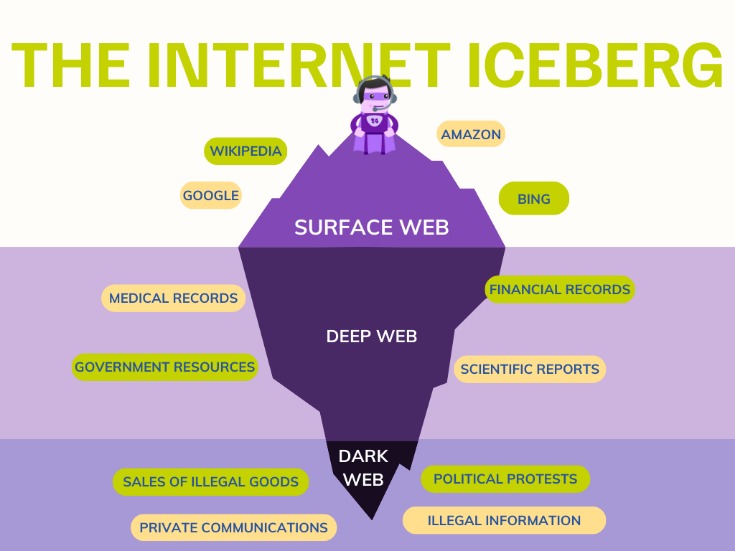
The dark web comprises a segment of the internet that requires specific software to access, commonly known as Tor (The Onion Router). This part of the internet is famous for its anonymity, making it an appealing platform for various users, including those wishing to conduct illegal activities. Here are some key points about the dark web:
- Anonymity: Users can browse and communicate without revealing their identities.
- Accessibility: It requires specific technology (like Tor) to reach websites that are not accessible through standard browsers.
- Variety of Content: While some content on the dark web is legal and benign, much of it involves illegal activities.
How Bitcoin Fits In
Bitcoin, a decentralized cryptocurrency, has become synonymous with the dark web due to its ability to facilitate transactions without the need for traditional banking methods. The characteristics of Bitcoin that make it appealing for dark web transactions include:
- Privacy: Bitcoin transactions do not require personal identification, allowing users to maintain anonymity.
- Irreversibility: Once a transaction is made, it cannot be reversed, which is attractive to sellers on the dark web.
- Global Reach: Bitcoin can be sent and received anywhere in the world, making it an efficient currency for international transactions.
The Risks Involved
While bitcoins dark web transactions may appear convenient, they come with considerable risks. Users should be aware of these factors:
- Legal Consequences: Engaging in illegal activities on the dark web can lead to severe criminal charges and penalties.
- Scams: The anonymity of the dark web makes it a hotspot for fraudulent schemes, where users may lose their money without recourse.
- Security Threats: Users are at risk of hacking, data theft, or exposure to malicious software.
Best Practices for Staying Safe

For those who may choose to explore the dark web or conduct transactions using Bitcoin, following best practices can help mitigate risks:
- Use a VPN: A Virtual Private Network adds an additional layer of security and anonymity.
- Stay Informed: Regularly update your knowledge about the dark web and cryptocurrency trends to make informed decisions.
- Limit Personal Information: Avoid sharing any identifiable information when browsing the dark web.
FAQs
Is it safe to use Bitcoin on the dark web?
While Bitcoin offers anonymity, using it on the dark web can be risky due to potential scams and legal issues. Exercise caution and stay informed.
What types of goods are purchased with Bitcoin on the dark web?
Common categories include illegal drugs, counterfeit items, hacking services, and stolen data, amongst others.
Can Bitcoin be traced?
While Bitcoin transactions are pseudonymous, they are recorded on a public ledger, meaning they can be traced by law enforcement and skilled analysts.
Understanding the intersection of bitcoins dark web is crucial for making informed decisions in the digital age. By staying educated about risks and safe practices, users can navigate this complex environment more securely.